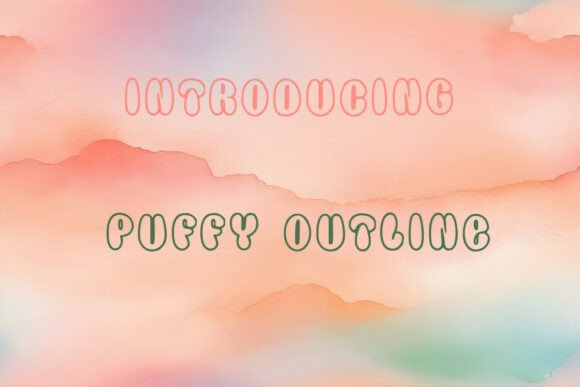
Puffy Outline: A Playful Display Font for Creative Projects
There’s something oddly satisfying about opening a blank brand board and knowing you have the right tool for the job. That moment of clarity came when I first tested Puffy Outline, a display font that feels like it was made for adding character to everything from clothing to stickers. As a designer who’s spent years working on branding projects, I can say with confidence that Puffy Outline is one of those fonts that instantly elevates a design without overcomplicating it.
Puffy Outline for Clothing and Apparel Design
When I started experimenting with Puffy Outline on a shirt mockup for a boutique clothing line, I immediately noticed how its soft, rounded edges gave the typography a friendly and approachable feel. It wasn’t just about the look—it was about the mood it created. This font has a playful yet refined energy that works well for casual apparel, especially when paired with bold colors or minimalist patterns.
I found that Puffy Outline performs best as a short phrase font, making it ideal for slogans, taglines, or even brand names printed directly on fabric. It’s not the kind of font you’d use for long paragraphs of text, but when used sparingly, it adds visual interest and personality. For instance, using it on a hoodie graphic or a t-shirt design makes the message stand out in a way that feels both modern and nostalgic.
Puffy Outline in Sticker and Merchandise Design
Another area where Puffy Outline shines is in sticker design. I recently used it for a set of custom vinyl stickers for a handmade shop, and the results were impressive. The font’s slightly exaggerated curves and subtle thickness give each letter a tactile quality, almost like they’re raised off the surface. This effect translates beautifully to physical merchandise, making the stickers feel more dynamic and engaging.
For digital stickers or social media graphics, I recommend using Puffy Outline as an accent font. Pairing it with a clean sans-serif font for body text helps maintain readability while keeping the overall design visually interesting. It’s also worth noting that this font’s versatility extends to other merchandise like mugs, tote bags, and keychains—any product that benefits from a touch of whimsy and charm.
Puffy Outline for Packaging and Brand Identity
Testing Puffy Outline on a packaging mockup for a skincare brand was a revelation. The font’s gentle, flowing lines complemented the natural ingredients and eco-friendly vibe of the product. It worked particularly well on label designs and outer boxes, where it added a sense of warmth and approachability without clashing with the minimalist aesthetic.
As part of a broader brand identity system, Puffy Outline functions well as a supporting typeface. It pairs nicely with serif fonts for a balanced contrast, and it doesn’t overpower more formal elements of the design. However, I would caution against using it as the primary font for long-form content or official documents, where clarity and professionalism are essential.
If you're considering Puffy Outline for your next project, be sure to review the included styles and file formats to ensure it meets your needs. Whether you're designing for print or digital platforms, having access to webfont versions can streamline your workflow significantly.
Design Considerations and Practical Tips
While Puffy Outline is undeniably versatile, it's important to test it in real-world scenarios before finalizing any client work. I recommend trying it at different sizes and on various backgrounds to see how it behaves. For example, it might look great on a large banner but could become less legible at smaller sizes, especially in low-contrast environments.
Before using Puffy Outline in commercial projects, always check the font licensing agreement to ensure it aligns with your intended use. If you're designing for a client, including it in templates, websites, or print-on-demand products, you’ll want to confirm that the license allows for such applications.
In summary, Puffy Outline is a display font that brings a unique blend of playfulness and sophistication to creative projects. Whether you're designing for clothing, stickers, packaging, or digital assets, it offers a fresh perspective that can help your brand stand out in a crowded marketplace. Just remember to use it wisely—where it enhances rather than distracts—and you'll find it to be a valuable addition to your design toolkit.